A Catholic Muslim Dialogue on the figure of Muhammad, Messenger of God
Posted On October 26, 2025
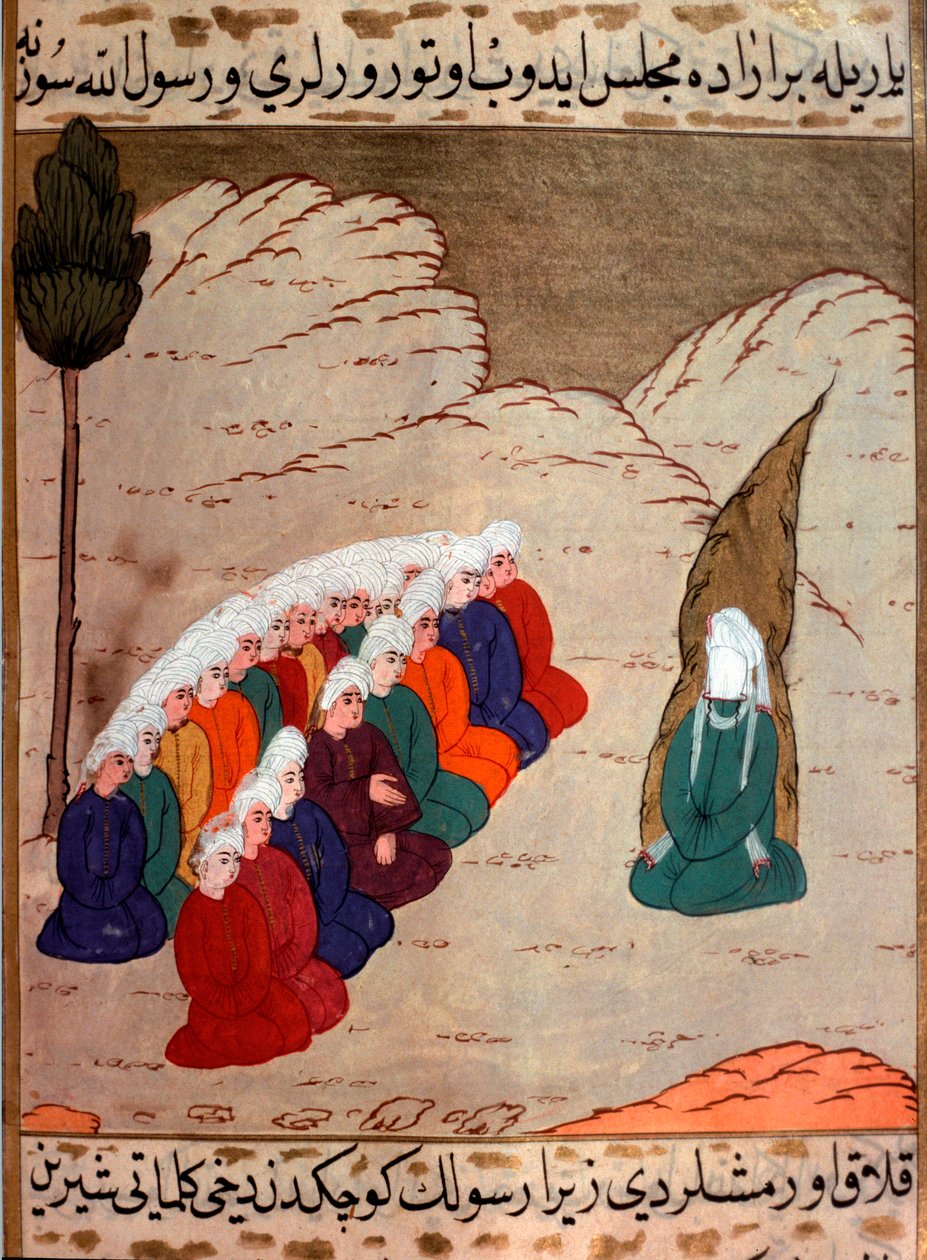
On Saturday, October 25th, the Islamic Center of Boston presented an interfaith dialogue opportunity through its Interfaith Bookclub, focusing on the book by Ekram Haque titled Muhammad: Son of Abraham, Brother of Moses, Successor of Jesus. Responses were shared by Rev. Dr. Ian Mevoarch of the Common Street Spiritual Center, Fr. Carl Chudy, D.Min., of the Metrowest Interfaith Community, and Our Lady of Fatima Shrine. Shaheen Akhtar, a member of the mosque, moderated the event.
by Fr. Carl Chudy, D.Min.
In Our Time
“In our time, as humanity is drawn closer together day by day, and the ties between different peoples become stronger, the Catholic Church examines more closely her relationship to those of faiths other than our own. In our task of promoting unity and love among all humankind, indeed among nations, we consider above all in this declaration what we have in common and what draws us to fellowship.”
I begin my thoughts on the enlightening volume by Ekram Haque, Muhammad: Son of Abraham, Brother of Moses, Successor of Jesus, with the first sentence of the Vatican II document, Nostra Aetate (In our Time), which ushered a revolutionary shift in how we as Catholics connect with the broader world. We share Mr. Haque’s driving concern when he states: “To my Christian and Jewish brethren, let us build our relationship on shared faiths…”
This year, we celebrate the 60th anniversary of this fundamental teaching on how Catholics, in accord with our tradition, must build solidarity with our friends of other faiths. Together with another teaching of Vatican II, Lumen Gentium (Light of the Nations), they guide us to understand some fundamentals of what I share with you:
Belief in one God, the creator of heaven and earth
The faith of Abraham.
Veneration of Jesus as a prophet, though not as the Son of God.
Veneration of the Virgin Mary.
Belief in the Day of Judgment.
Valuing prayer, almsgiving, and fasting.
The late Pope Francis envisioned this as an opportunity to build a new culture of encounter and connection. He goes on to say in 2013, “Indeed, situations in the world where coexistence is difficult are not lacking: often political or economic motives overlap with cultural and religious differences, which also play upon misunderstandings and mistakes of the past: this is all likely to generate suspicion and fear. There is only one road to conquer this fear: dialogue and encounter marked by friendship and respect. When we take this path, it is a human one.”
There is Something More
Mr. Haque relates: “We live in a time of great political and religious turmoil when fringe groups of Muslims and non-Muslims push for a clash of civilizations. Therefore, it is imperative to retell the life story— the Seerah— of Muḥammad, the Messenger of God, so we may remind Muslims of his noble legacy and inform non-Muslims about it.” I did not know the meaning of “Seerah,” but his further explanation sparked something in me. His seerah! His extraordinary life, touched so deeply and so profoundly by the God of Abraham, Isaac, Ishmael, and Jacob, and our need to retell it. Yes, it is ours; Muslim and non-Muslim. The narrative of his life that God wrote, those years of hardship, persecution, faith, and mission, expressed what I call the dreams of God in his flesh, his years, his loves and struggles, not only for him, but the legacy of the faith for us all. I am a Christian, but I am grateful for Muhammad’s faith.
The Prophet Muhammad & the Communion of Saints
The author explains that Muslim families taught Seerah, along with the Qur’an, because it was so central to faith to know, in some way, the person of Muhammad and the words of the Qur’an he conveyed. He mentioned some of the fifty Qur’anic verses that address this. One verse in particular piqued my interest: “ Indeed, in the Messenger of Allāh, you have a good example to follow for him who hopes in Allāh and the Last Day and remembers Allāh much.” (Surah Al-Ahzab, verse 21)
There are three striking assertions for me. First, “follow for him who hopes in Allah.” Submission to God requires knowing deeply the person of Muhammad. His life was indeed a life of submission against incredible odds. His life is inextricably tied to the Words of God he conveyed. Second, Muhammad witnessed and showed in concrete terms the hope of God. I, too, hunger for God’s hope, particularly in the times we live today. Lastly, the memory of Muhammad is the legacy passed on to our Muslim friends and one I seek to understand. If interfaith dialogue has any value, it is to understand the inspiration of friends whose faith is not my own to fathom more deeply the mystery of God’s hope throughout the cosmos.
These thoughts strike a deep chord within me as a Catholic Christian. In my faith, too, some have gone before me, including my parents, whose faith and witness are the foundation of the faith choices I make today. Even more, we understand that our community of faith transcends space and time, reaching back many centuries, whose legacy I stand on today. That community is always present and “alive.” We call it the communion of saints. These saints, extraordinary men and women of faith, are “present” in their prayers and in our prayers for them. They are as real as you who stand before me, and the inspiration they convey, not just in the past during their lives on earth, but today in a real way. We hold a “communion” with these saints of the past, aiding us in our faith journey. Their death is no obstacle.
This image of communion of saints provides me with a segway to understand what the relationship of Muhammad with Muslims worldwide may mean, and indeed with non-Muslims as well. It is:
A communion in holy things in the sharing of God’s blessings
A communion that shares spiritual gifts among people who strive to submit to God, whether they are living or deceased
A communion that provides mutual support in the story of Muhammad’s life
In Omid Safi’s book, Memories of Muhammad: Why the Prophet Matters, he also speaks of the importance of imitation. The lives of saints and communion with them provide a framework for imitation. Haque reminds us that Muslims do seek to replicate the Prophet Muhammad, viewing his life as the ideal example for how to live a life pleasing to God. The Qur’an itself presents the Prophet as “an excellent example” for believers. However, this emulation focuses primarily on his character and religious practice. We, too, seek to imitate our saints.
Some Christians in the past used to wear bracelets with the letters WWJD —What Would Jesus Do? For us, a good ethical guide is to put on Jesus’ sandals and contemplate what he would say and do in the struggles and doubts of life. In the Jewish tradition, Leviticus reminds us, “you shall be holy, for I the Lord your God is holy.” (Leviticus 19:2). Our gospel of Matthew underlines this, “therefore you are to be perfect as your heavenly Father is perfect.” (Matthew 5:48) We seek to embody the loftiest ideals by imitating the most luminous souls which begs the question, WWMD, what would Muhammad do? Say: “If you love God, follow me, and God will love you.” (Ali ‘Imran 3:31)

